Decluttering
What to Declutter First When You Don’t Know Where to Start
When everything looks cluttered, choosing where to begin can become the hardest part. Use this simple approach to find the small area that will create the most relief without trying to tackle an entire room.
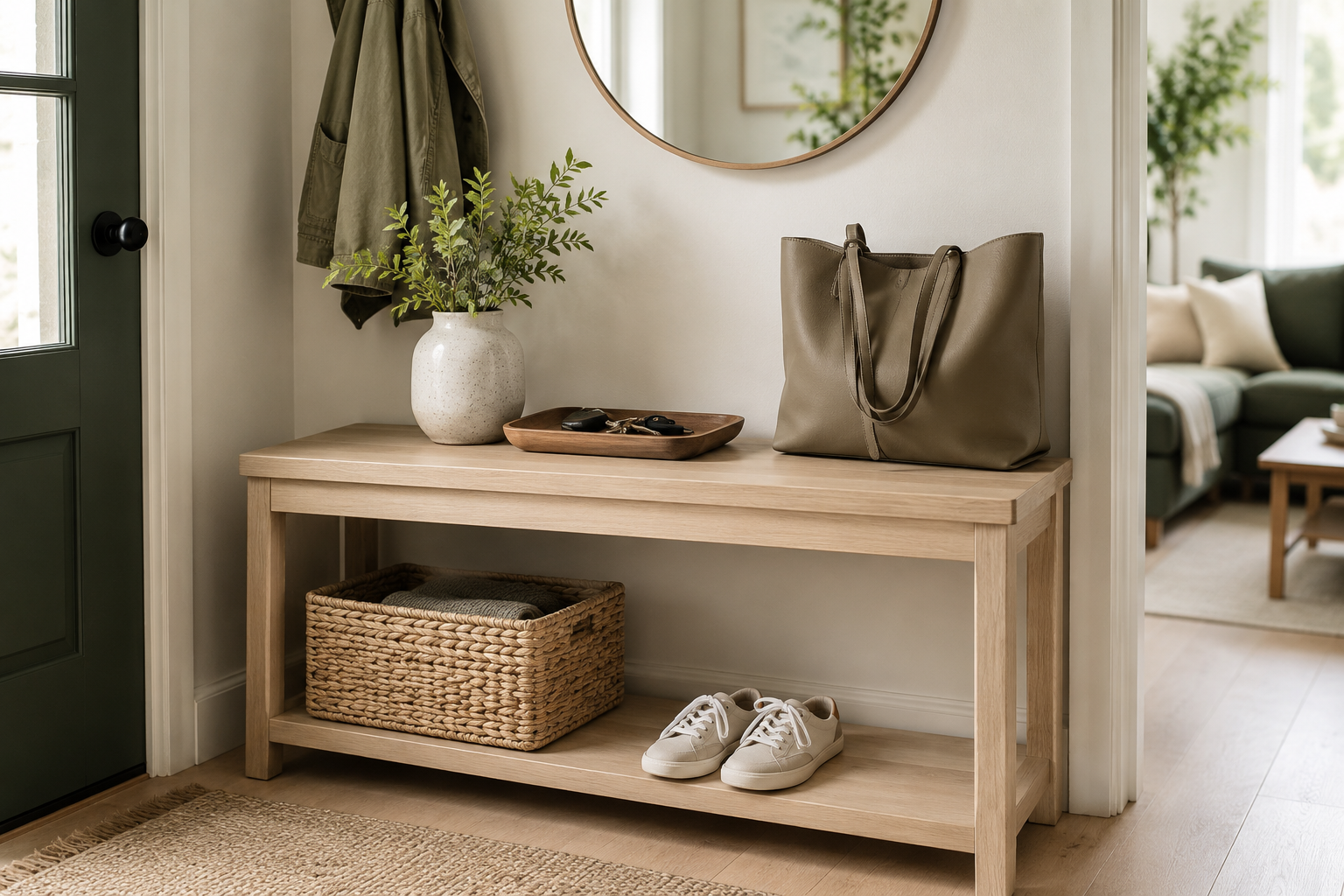
When several parts of your home feel cluttered at once, deciding where to start can become a task of its own.
You notice the hallway, the kitchen counter, the chair covered in clothes, the bathroom drawer and the pile of papers you have been meaning to sort.
Everything appears to need attention.
So you either choose the biggest problem and immediately feel overwhelmed, or spend so long thinking about the best starting point that nothing actually gets started.
A more useful question is:
Which small area would make everyday life noticeably easier if I cleared it?
That is usually a better place to begin than the room that looks worst.
Do Not Start With the Whole Room
“Declutter the bedroom” sounds like one task.
In reality, it may include:
- the bedside table
- clothes on the floor
- the wardrobe
- drawers
- books
- paperwork
- under-bed storage
- sentimental items
That is not one decision. It is dozens or hundreds of them.
Instead, choose a clear boundary.
For example:
- one shelf
- one drawer
- one chair
- one bedside surface
- one small section of kitchen counter
- one basket
- one category of clothing
A small boundary gives the session a finish line.
You can always choose another area later.
Start With What Is Blocking Something Useful
One of the simplest ways to choose your starting point is to look for clutter that prevents you from doing something.
Walk through your home once without picking anything up.
Notice where clutter creates friction.
For example:
- Shoes make the entryway difficult to walk through.
- Clothes cover the chair where you usually sit.
- Papers take up the part of the desk where you need to work.
- Kitchen items leave no clear food-preparation space.
- Toiletries crowd the bathroom sink.
- Objects on the bedside table make it difficult to find what you use at night.
Then ask:
What action do I want this space to support?
That gives you a practical reason for clearing it.
You are not decluttering because the area is “bad.”
You are creating space for something you actually want to do.
Choose by Relief, Not by Shame
It is easy to assume you should begin with the area you feel worst about.
Perhaps it is a messy wardrobe, an overflowing cupboard or a storage room you have avoided for months.
But the area that creates the most guilt is not necessarily the area that will create the most useful improvement.
Instead, ask:
Which small change would give me the most relief?
Maybe clearing the kitchen counter would make dinner easier every day.
Maybe removing the pile from the entryway would make leaving the house less frustrating.
Maybe clearing one chair would finally give you somewhere comfortable to sit.
A small area with a noticeable daily benefit is often a stronger starting point than a large hidden problem.
Think About Impact and Effort Together
A useful starting area has two qualities:
- Clearing it would noticeably improve everyday life.
- It is small enough to finish without creating a bigger mess.
Imagine four possible tasks:
- clear the entryway floor
- reorganize the entire wardrobe
- sort one drawer
- declutter the garage
The wardrobe or garage may technically contain more clutter.
But if clearing the entryway takes ten minutes and immediately makes arriving and leaving easier, it may be the better first choice.
Look for the combination of high relief and manageable effort.
That is often where momentum begins.
Good First Decluttering Areas
If you still cannot decide, choose one of these.
The entryway
This is a useful place to start when shoes, bags, post or outgoing items make leaving the house harder.
Try clearing the floor and creating one reliable place for daily essentials.
One kitchen preparation surface
Do not start inside the cupboards.
Clear enough counter space to prepare your next meal or drink comfortably.
A functioning counter often provides more immediate value than perfectly organized storage.
One seat in the living room
If objects have gradually taken over the sofa or your favourite chair, clear one place to sit and the surface nearest it.
You do not need to finish the whole room.
Your bedside surface
Remove rubbish, cups and anything that belongs elsewhere.
Keep the few things you actually use beside the bed.
One bathroom surface
Clearing the sink edge or grouping daily products can create an immediate sense of order without opening every drawer.
One small drawer
Choose a drawer you use regularly rather than the most complicated one in the house.
Remove obvious rubbish, broken items and things with clear homes elsewhere.
Start With the Obvious Decisions
Once you choose your small area, do not begin with the hardest object.
Start with things that require almost no debate.
That might include:
- rubbish
- empty packaging
- broken disposable items
- objects that clearly belong in another room
- obvious recycling
- items you already know you no longer use
The goal is to create movement before you reach decisions that require more thought.
If you begin with an object that carries guilt, money, memories or uncertainty, one decision can consume the entire session.
Leave difficult items until you have already created some visible progress.
Give Every Item a Destination
For the items you do handle, keep the choices simple.
Most objects will eventually fit into one of four destinations:
- keep it here
- move it somewhere else
- donate or sell it
- discard or recycle it
You do not need a detailed explanation for every decision.
You only need to know what happens next.
If something genuinely needs more thought, set it aside temporarily rather than allowing it to stop the whole session.
Match the Task to Your Energy
The best starting point also depends on what you can realistically finish today.
On a very low-energy day, your first decluttering session might simply be removing five obvious items.
With a little more capacity, you might clear one visible surface.
On a steadier day, you might complete one short contained decluttering session and put everything into its destination.
The goal is not to choose the most impressive task.
It is to choose the task you can close properly.
Avoid emptying an entire cupboard, wardrobe or storage area unless you have the time and energy to sort and return everything.
Creating a larger mess is rarely a useful first step.
Decide What “Enough” Means Before You Begin
Before touching anything, define the finish line.
For example:
Minimum:
The area is easier or safer to use than it was before.
Good:
Obvious rubbish is gone, misplaced items have moved and the chosen area has visibly improved.
Great:
The small area is cleared and only useful or wanted items remain.
None of these require you to finish the room.
A clear finish line prevents a ten-minute task from expanding into an afternoon-long project.
If You Still Cannot Decide, Use This Rule
Choose the small area you interact with most often.
Then ask:
What is stopping this space from doing its job?
Remove the most obvious things creating that problem.
That is enough for a first session.
You do not need the perfect decluttering order.
You need one contained place where a few decisions can make everyday life noticeably easier.
Your First Step
Look around your home and choose one small boundary.
Not the whole room.
Not the most embarrassing area.
Not the project you have been avoiding longest.
Choose the place where a small improvement would create the most relief.
Clear that first.
Then stop.
The next starting point will usually be easier to see once you have finished the first one.