Shared Home
Different Organizing Styles in a Relationship: How to Make One Home Work for Both of You
One person wants clear surfaces. The other needs things visible and easy to reach. Learn how to build shared-home systems around both styles instead of deciding who is “right.”
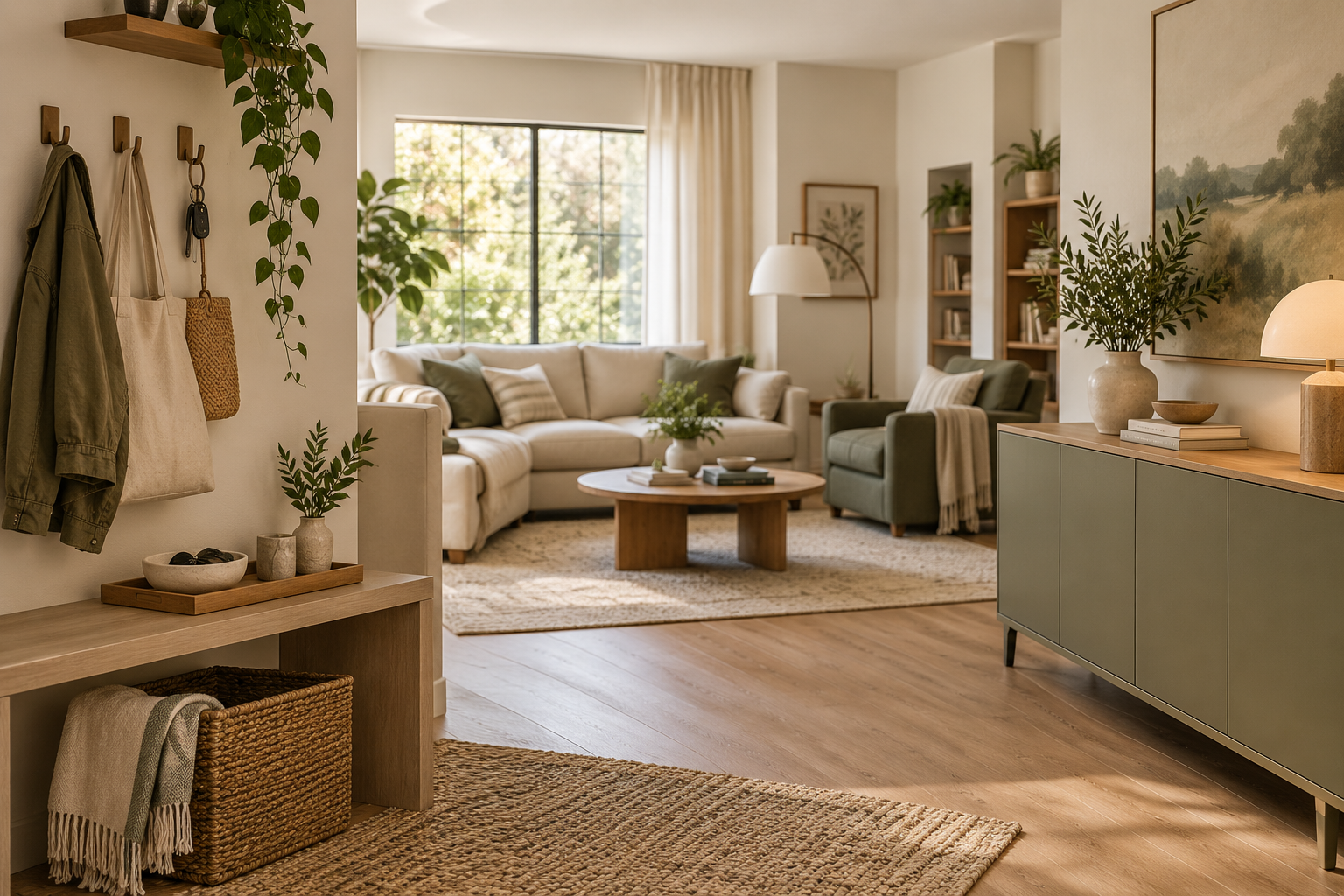
Two people can want the same thing from a home — less stress, fewer lost items and rooms that are easy to use — while having completely different ideas about how to get there.
One person may relax when surfaces are clear and objects are hidden away. The other may forget an item exists unless it stays visible. One person happily sorts cables into several precise categories. The other will reliably use one basket labelled “chargers & cables” and nothing more complicated.
Neither person has to be the problem.
A more useful starting point is to treat different organizing styles as design information. Instead of asking who is tidier or more organized, ask what each person needs in order to use and maintain the shared space.
That shift makes it possible to build a home that works for both people without requiring identical habits.
Different organizing styles are not a character problem
Words such as messy, particular, lazy or controlling describe a person. They do not tell you how to improve a cupboard, an entryway or a kitchen counter.
A practical shared-home conversation gets more specific.
Instead of:
- “You leave everything out.”
- “You hide everything.”
- “Your system is too complicated.”
Try describing the preference or friction:
- “I remember things more easily when I can see them.”
- “I relax more easily when the main surfaces are visually quiet.”
- “I stop using a system when putting something away takes too many steps.”
- “I find things faster when categories are more detailed.”
Once the difference is concrete, it becomes something you can design around.
First, identify where your organizing styles actually differ
Most couples are not opposites in every part of the home. The useful differences usually show up in a few recurring patterns.
Visible vs hidden
A visible-leaning person may prefer hooks, trays, open baskets, clear fronts and frequently used items near the point of use.
A hidden-leaning person may feel calmer with closed cupboards, drawers, clear counters and fewer things in sight.
The answer does not have to be “open storage everywhere” or “everything behind a door.” A shared solution might be one contained tray on an otherwise clear surface, or a labelled container inside a closed cupboard.
Broad vs detailed categories
One person may happily return everything to broad categories such as:
- paperwork
- cables
- snacks
- cleaning supplies
Another may prefer several subcategories because detail makes retrieval easier.
For shared storage, the most sustainable category is often the broadest category that still lets both people find what they need.
Put away now vs batch later
Some people prefer to close a task immediately: hang the coat, return the item, deal with the cup.
Others work better by collecting similar actions and processing them together: one laundry basket, one returns station, one paper inbox or one evening pass through the house.
This difference often causes conflict because one person sees a temporary collection point as unfinished clutter while the other sees it as a realistic workflow.
A batch system becomes much easier to live with when it has a clear limit or review time: “empty the tray each evening” is more useful than repeatedly arguing about whether the tray should exist.
One-step vs multi-step storage
A system can look perfectly logical and still fail if putting something away requires too many actions.
If returning an item means opening a door, pulling out a box, removing a lid, finding a subcategory, replacing the lid and putting everything back, one person may maintain it while the other repeatedly leaves the item beside the container.
That is useful evidence.
For shared systems, reduce the return steps before adding another reminder or rule.
If your home has several recurring differences like these, it can also help to agree on what “clean enough” means in the spaces you both use.
Stop trying to make one organizing system fit two people
A common mistake is choosing the most aesthetically satisfying system and expecting both people to adapt to it.
But the most beautiful system is not automatically the most maintainable one.
Shared storage works better when it is designed around what people actually do.
Ask:
- Where does this item naturally get used?
- Where does it usually land now?
- How many steps does it take to return?
- Does someone need to see it to remember it?
- Does someone else need the surrounding surface to stay visually calm?
- How much category detail will both people realistically maintain?
Then build the system around those answers.
For example, a partner who wants clear counters and a partner who needs daily items visible do not necessarily need to choose one preference. A single contained tray for daily-use objects may protect both needs.
The goal is not a perfect compromise on every preference. It is a shared system that both people can actually use.
Use function before appearance
When two people disagree about how tidy a room should look, decide what the room must allow you to do first.
A kitchen may need to let you:
- prepare food
- use the sink
- find daily tools
An entryway may need to let you:
- open the door easily
- leave without searching for keys or a bag
- walk through without stepping around shoes
A living room may need to let you:
- sit down
- use the main table
- access shared items
Once the function is protected, appearance preferences become easier to negotiate.
Instead of “keep the dining room tidy,” a clearer shared standard might be:
The dining table is clear enough to eat at by 6 pm.
That gives both people the same finish line without requiring the same method.
If this is the main source of tension in your home, read Different Cleanliness Standards in a Relationship: How to Agree on “Clean Enough”.
Make shared storage easy to return to
One of the most useful shared-home rules is simple:
The best home for an item is the easiest place both people can realistically return it.
That often means:
- storing an item where it is actually used
- reducing doors, lids and nested containers
- using broader categories
- keeping frequently used objects close
- containing visible items instead of automatically hiding them
- testing a location before buying new organizers
Suppose coats repeatedly land on a chair near the entrance while the wardrobe is down the hall.
You could create another rule about hanging coats in the wardrobe.
Or you could test a hook near the arrival point.
If the hook changes the behaviour, the problem was probably not a lack of reminders. The return path was simply asking for too much effort.
Not every part of the home needs the same rules
A shared home becomes easier when you distinguish between spaces both people rely on and areas that can remain more individual.
A kitchen preparation counter may need a shared standard because one person's belongings can block the other person's ability to cook.
A bedside drawer usually does not.
This is why it helps to separate:
- shared zones, where both people need access and function
- personal zones, where one person can manage the area in their own way
- handoff zones, where an item can wait for the person who owns the next decision
That boundary prevents every difference from becoming a household negotiation.
For a practical way to set those boundaries, see Shared vs Personal Spaces: How Couples Can Organize a Home Without Managing Each Other’s Stuff.
When clutter keeps turning into the same argument
If you keep having the same argument, make the problem smaller.
Do not start with:
“Why is the house always like this?”
Choose one repeated friction point instead:
- bags on the dining chair
- shoes blocking the entry
- daily toiletries covering the sink
- papers spreading across the kitchen counter
- chargers never making it back to their storage
- one person repeatedly moving the other person's belongings
Describe:
- where it happens
- what keeps happening
- what useful function is being blocked
“Bags land on the dining chair, so the chair is not usable at dinner” gives you something you can solve.
“You leave things everywhere” usually gives you another argument.
If the household problem has started feeling personal, use the more specific process in How to Stop Arguing About Clutter With Your Partner.
Try one change instead of reorganizing the whole house
You do not need to redesign every room to find out whether a shared-home idea works.
Pick one repeated friction point and try one small change for seven days.
A useful sequence is:
- Pinpoint the exact friction.
- Identify what each person needs from the space.
- Verify the function that must be protected.
- Organize for the easiest realistic return.
- Test the change, then tweak what repeatedly fails.
For example:
Friction: Shoes spread across the entryway.
Person A needs: A visually calm entrance.
Person B needs: Shoes to be easy to remove and return.
Shared function: Both people need to enter and leave without stepping around footwear.
Experiment: A simple daily-shoe zone beside the door with a firm capacity limit.
Test it for a week before buying a more elaborate shoe organizer.
If the shoes still land somewhere else, that is not proof that one person “doesn't care.” It is information about the system.
One home does not require one organizing personality
A workable shared home does not depend on two people becoming equally tidy, equally detailed or equally willing to put things away immediately.
It depends on noticing where your habits differ and designing the shared system around those differences.
Start with one repeated friction point.
Name what each person needs. Protect the function of the space. Make the desired action easier. Test the change long enough to learn from it.
Different methods can still create one workable home.