Decluttering
How to Declutter Sentimental Items Without Regret: Keep the Meaning, Not Every Object
Sentimental decluttering is difficult because the decision is rarely about usefulness alone. Use four calm options to preserve what matters without keeping every physical object.
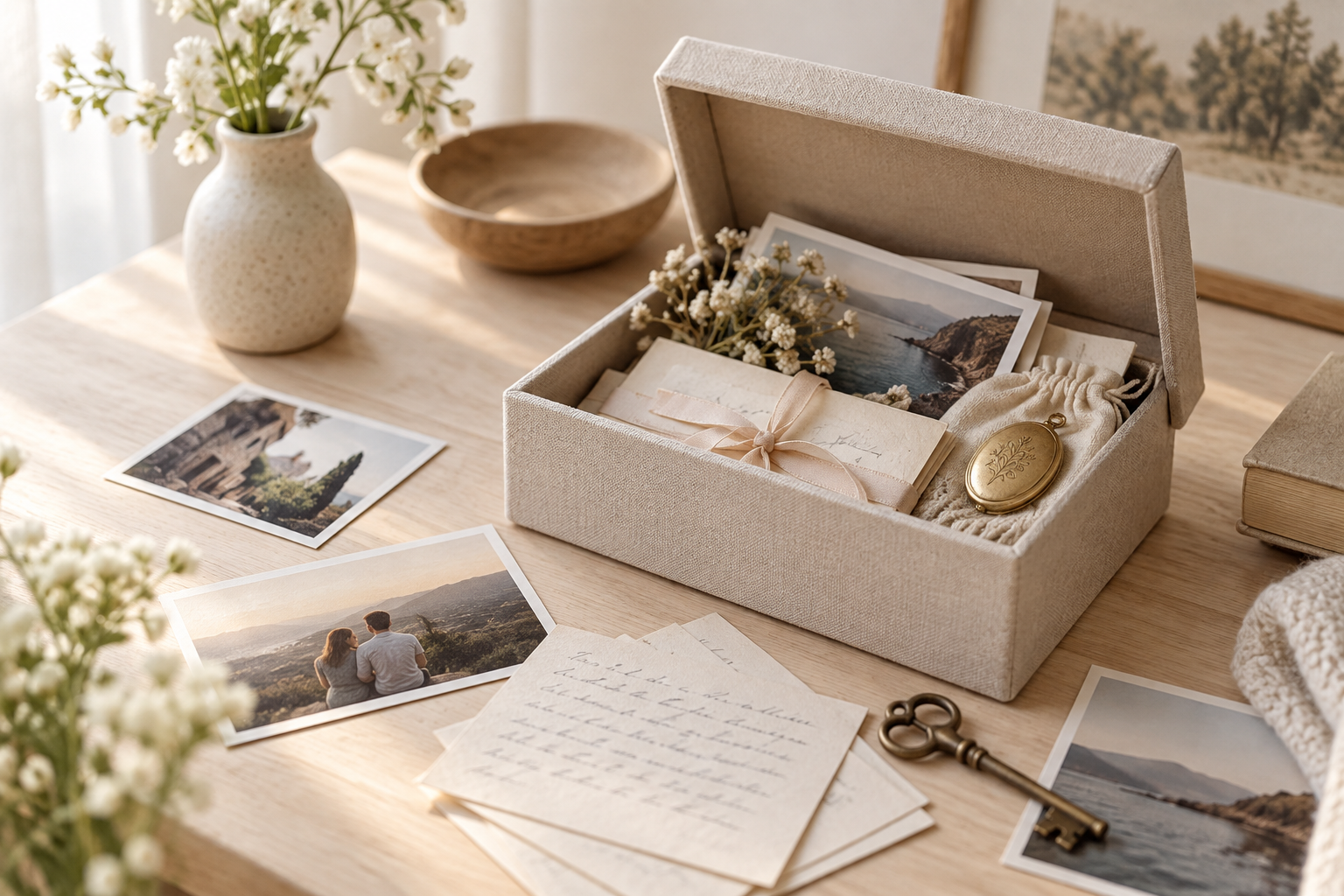
Sentimental items are difficult to declutter because the decision is rarely about usefulness.
A concert ticket may have no practical purpose and still bring back a specific year of your life.
A child's tiny jumper may no longer fit anyone, but it can feel connected to an entire stage of family life.
A box of letters may contain papers you almost never open and memories you do not want to lose.
That is why sentimental belongings deserve a different kind of decluttering session.
The goal is not to decide whether every object is “sentimental enough.”
A more useful question is:
How do I want this memory to live in my life now?
If ordinary decluttering already feels too large, start with How to Declutter Without Getting Overwhelmed and keep this session deliberately small.
Why sentimental items need their own session
Everyday decluttering usually becomes easier when you make quick practical decisions.
Do I use this?
Does it belong here?
Is it broken?
Would I choose it again?
Sentimental items are different because an object may matter even when you do not use it.
Trying to process emotionally complicated belongings in the middle of an ordinary room session can stop the whole process.
You pick up one letter.
Then another.
You start remembering.
You question whether letting go means you did not value the person, event or period enough.
A ten-minute drawer session quietly becomes a review of your entire history.
Instead, separate sentimental belongings from ordinary clutter and give them their own boundary.
Start with one tiny group, not every keepsake you own
Do not begin with:
- every family photograph
- all childhood belongings
- the entire attic
- every letter
- every box inherited from someone
- all of your children's keepsakes
Choose something you can finish.
For example:
- one box layer
- ten photographs
- one envelope of letters
- one shelf
- one small group from the same event
- one handful of childhood objects
The finish line matters more than the size of the result.
A small closed session is more useful than opening six boxes and leaving them all across the room.
Separate the memory from the object
A physical object can hold meaning, but the meaning is not always dependent on storing the object forever.
Before deciding what to do with something, name what it represents.
Ask:
- What person does this remind me of?
- What event or period does it represent?
- What part of the story matters?
- Do I value the actual object, or what it helps me remember?
- Would another form preserve enough of that meaning?
This is not a trick to persuade yourself to discard everything.
Sometimes the object itself is exactly what you want to keep.
The point is to understand what you are protecting before deciding how much physical space it needs.
Option 1: Display
Choose Display when the object deserves visible space and adds something meaningful to your present life.
Good display items are not simply things you are afraid to throw away.
They are things you actively want to see.
That might be:
- one framed photograph
- a meaningful piece of pottery
- a small heirloom
- one child's artwork
- a travel object
- a letter displayed in a frame or album
Display gives an object a current role.
Instead of storing twenty meaningful items in a closed box, you may decide that one or two deserve to be part of the room you live in now.
Option 2: Keep Safely
Choose Keep Safely when you genuinely value the physical object but do not need it on display.
The important part is giving the category a defined, protected storage limit.
That could be:
- one keepsake box
- one album
- one shelf
- one document case
- one archival container
Choose the container first.
Then let the space help you decide which pieces are most meaningful.
A container limit is not there to punish you or force arbitrary loss.
It prevents a sentimental category from expanding indefinitely simply because every individual object can make a case for itself.
Option 3: Record
Sometimes the physical item is not the part you most want to keep.
A record can preserve the part that matters.
You might:
- take a photograph
- scan a letter
- photograph a child's project
- write down the story behind an object
- record who gave it to you and why it mattered
- create a small digital album
Recording works especially well when the memory matters more than the material object.
For example, you may not need to keep an entire bulky school project if a photograph preserves the part you actually want to remember.
Or you may choose to scan a fragile note so the words survive even if the original paper does not need permanent storage.
Option 4: Release
Release means deciding that the memory can remain even when you no longer store the object.
This can include donating a usable item, passing something to a relative who genuinely wants it, recycling what can be recycled or discarding something that no longer has a useful destination.
Releasing is not the same as deciding the memory was unimportant.
The decision is simply that the physical object no longer needs to carry that memory for you.
If the item is still usable and you have already decided it can leave, the next question may be whether it is worth selling or whether a faster donation route is better. Use Sell or Donate? How to Decide What Is Actually Worth Selling for that decision.
Choose the container before choosing everything inside it
Sentimental decisions become difficult when the implied question is:
Which of these meaningful things am I allowed to keep?
Try changing the question.
Choose the space first.
For example:
I am comfortable giving childhood keepsakes one medium box.
Now the task becomes:
Which objects best represent what I want this box to hold?
That is often easier than deciding whether every item is individually meaningful enough to deserve indefinite storage.
The container gives the category a physical boundary.
You choose what matters most inside it.
Do not use guilt as a storage rule
Sentimental belongings often become mixed with obligation.
You may hear thoughts such as:
- “Someone gave this to me.”
- “This belonged to a relative.”
- “I paid a lot for this.”
- “I should keep this because it is old.”
- “What if my child wants it someday?”
- “Getting rid of it would feel ungrateful.”
Pause and separate the feeling from the storage decision.
You can appreciate a gift and still decide it no longer belongs in your home.
You can value a person without keeping every object associated with them.
You can acknowledge money already spent without using that cost as a reason to keep storing something you do not want.
For general item decisions, the Keep, Donate or Throw Away framework can help you distinguish current usefulness from habit, guilt and sunk cost.
What if you genuinely cannot decide yet?
Some items really do need distance or more information.
Use a temporary Not-Sure Box, but give it an ending.
A useful version has:
- one container with a clear size limit
- the packing date written on it
- a review date within 30–60 days
- no new items added after the box is closed
At the review date, decide once.
Keep, donate or discard.
If you forgot what was inside and did not need anything before the review date, that is useful evidence.
The Not-Sure Box should keep one difficult decision from stopping the whole session.
It should not become permanent storage for every object you do not want to think about.
Avoid sentimental decluttering when your energy is already spent
Decision-heavy categories need more attention than obvious rubbish or duplicate kitchen tools.
Do not save sentimental belongings for the final exhausted hour of a long decluttering day.
Choose a short, separate session.
Stop if you notice that every object is turning into a long internal debate.
A useful session could be as small as:
- review five photographs
- choose three letters for one folder
- decide one shelf of keepsakes
- record the story behind one object
- release one item you already feel ready to let go
You do not need emotional certainty about your entire past to create a little more space today.
A simple sentimental decluttering session
Try this with one tiny group.
1. Choose the boundary
One box layer, one envelope, one shelf or one small group.
2. Name what the group represents
What story, person or period are you trying to preserve?
3. Use four destinations
Display
I want this visible in my present life.
Keep Safely
I value the physical object enough to give it protected storage.
Record
A photograph, scan or written story preserves what matters.
Release
I can keep the memory without continuing to store the object.
4. Close the session
Return displayed items.
Put safely kept items into their defined container.
Save any records you created somewhere predictable.
Move outgoing items to their next destination.
Then stop.
Keep the meaning, not every object
Sentimental decluttering does not need to be aggressive.
It needs a clear boundary and a way to preserve what actually matters.
Some things deserve to stay.
Some deserve to be displayed instead of forgotten in a box.
Some memories can live in a photograph or written story.
Some objects can leave while the meaning remains.
Start with one small group.
Decide how you want the memory to live now.
Then let that be enough for today.